Why Do Billionaires Go To St Barts?
The structural reasons billionaires keep choosing St Barts: a 25 km2 island, a 646 m runway, scarce villas and a short, intense winter season.
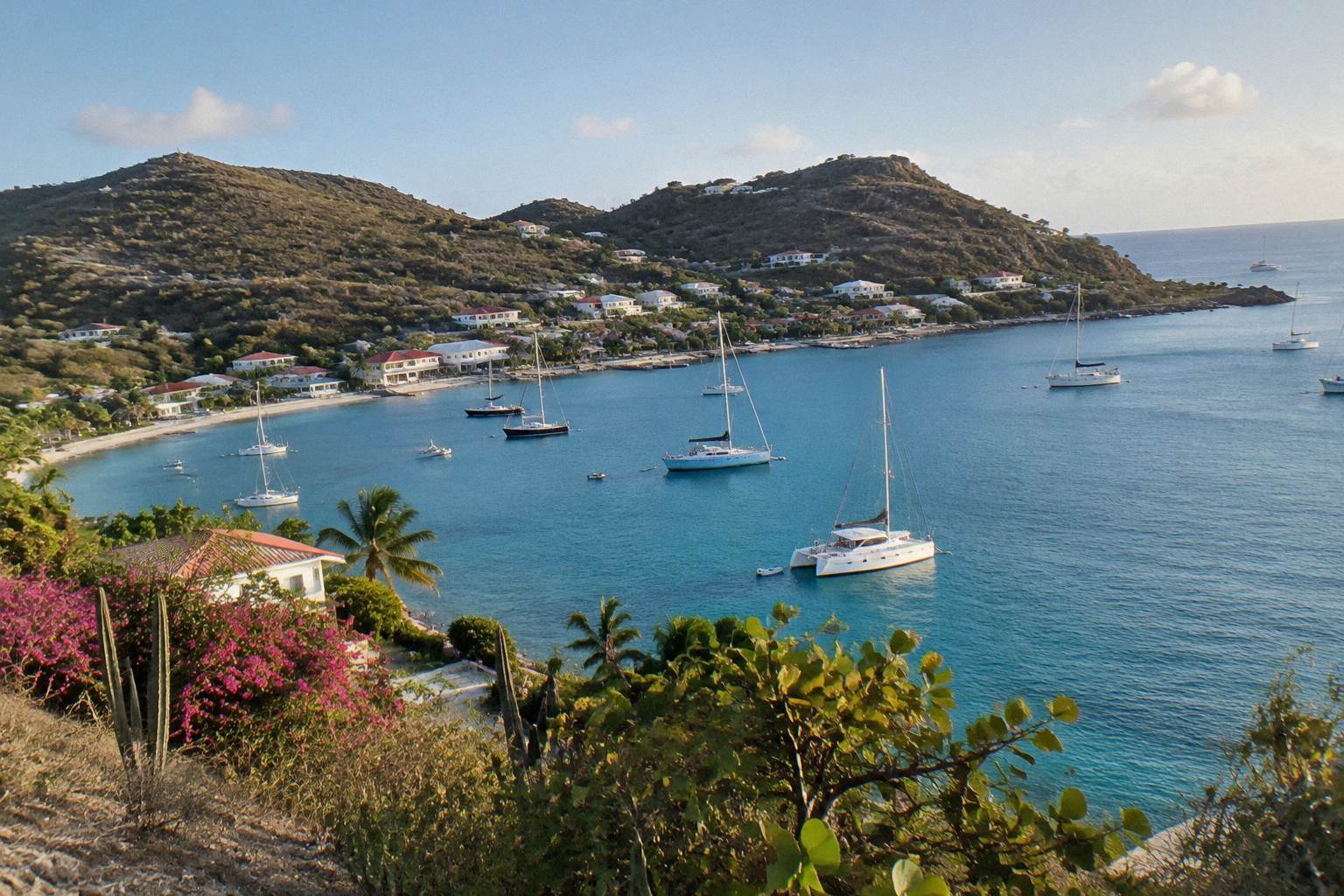
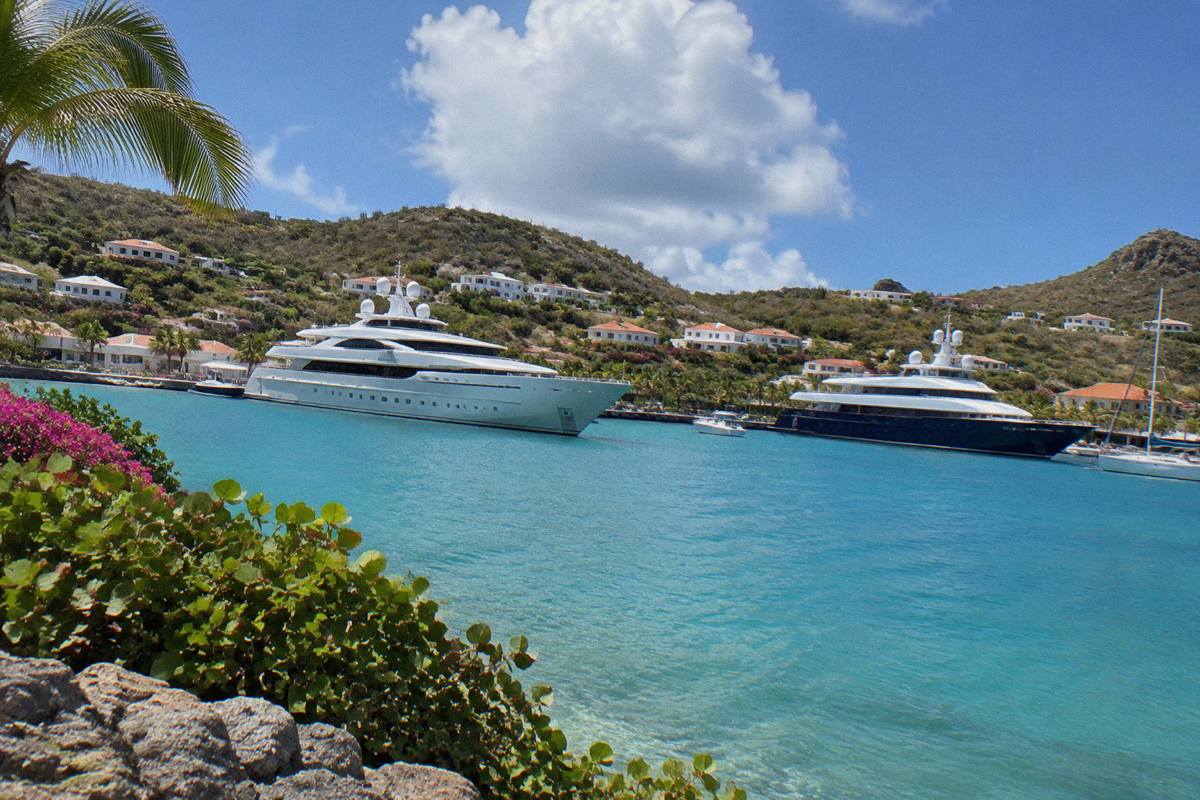
St Barts recorded its largest ever gathering of large yachts on New Year's Eve 2025: 226 vessels longer than 78 feet in and around Gustavia harbour, up from 170 the year before. That single count explains the question better than any celebrity anecdote. The island is 25 square kilometres with about 10,660 inhabitants, an overseas collectivity of France where the euro is the currency, and for roughly ten weeks each winter it becomes the densest concentration of private wealth in the Caribbean. This article sticks to the structural reasons, the ones that survive any change of fashion: a short runway, a small hotel stock, fewer than 300 luxury villas, a harbour built for superyachts and a high season that is over almost as soon as it starts. No individuals are named here, because the pattern does not depend on any of them. The same scarcity that fills the harbour with superyachts also pushes up prices for everyone else, so our guide to why St Barts costs so much and how to spend less is worth a read.
The pull is structural: a 646 m runway that limits aircraft size, only about 500 luxury hotel rooms across 11 hotels, fewer than 300 luxury villas, and a harbour that hosted 226 superyachts at New Year's Eve 2025. Scarcity, not marketing, is the product the island sells.
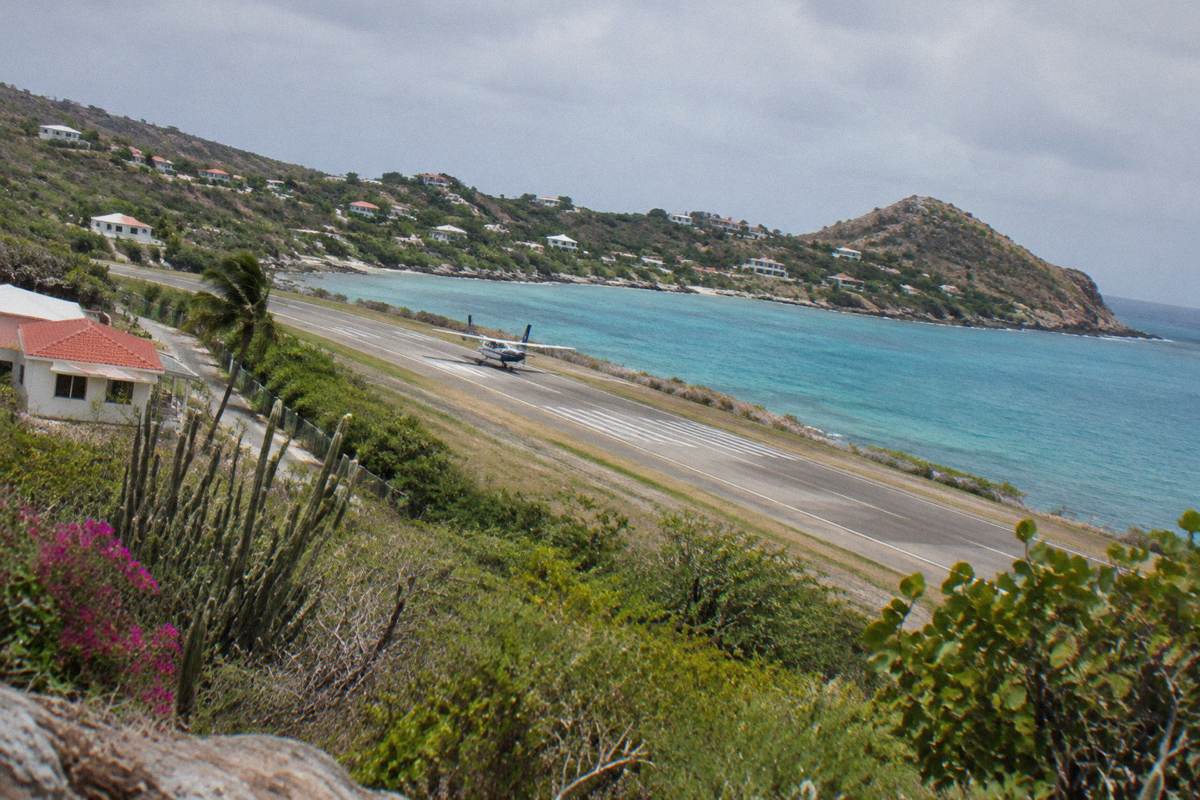
Start with the runway. Gustaf III airport has a single strip, 646 metres long, concrete, with a steep approach over a hilltop road, and it operates in daylight only because there is no runway lighting. A runway that short keeps out anything larger than a small turboprop, so almost everyone connects through St Maarten for a final 15 minute hop. Access is deliberately, physically limited, and that limit shapes who finds the trip easy and who does not. For anyone starting the journey in the States, the guide to flying from the US to St Barts explains which routing actually gets you onto that short strip.
Then there is what is waiting on arrival. The Observatoire du Tourisme counted 26 hotel establishments on the island in 2025, of which 11 are luxury properties holding roughly 500 rooms between them. Luxury here is capped by geography: the island is 25 square kilometres, most of it hillside, and the island's entire room count is barely more than a single large mainland resort, so nobody can add a big box property here. An island that cannot add supply keeps its prices and its cachet.
The villa market repeats the same maths at a bigger scale. Gustavia Harbor reported in May 2026 that fewer than 300 luxury villas exist on the entire island, and Knight Frank's 2026 digest notes that around 95 percent of owners rent their properties out, with top homes fetching up to US$500,000 a week around New Year's Eve and the strongest performing up to US$1.2 million in gross annual rental income. Those are market benchmarks from the digest, indicative rather than quotes, but they show the ceiling: the best weeks are auctioned by demand because the stock is fixed. For a sense of what the high end looks like as a stay, the Mystique villa in Saint-Jean, four bedrooms sleeping eight with a private pool and sea view, is one of the larger private rentals listed on this site, and it carries no nightly figure because the listing prints none without dates.
The harbour closes the loop. Gustavia is the island's primary superyacht anchorage, with a few dozen inner berths and outer anchorages for the largest vessels, and New Year's Eve berths are typically sought a year in advance. The fireworks over the harbour on 31 December, answered by yacht foghorns, are reported annually and were no exception in the 2025 season that drew the record 226 boats.
Why Do Billionaires Like St Barts?
Because the island is French, small and hard to reach, which produces three things money usually cannot buy: a fixed ceiling on crowds, a walkable social scene in Gustavia, and a season so short that everyone worth meeting is there in the same ten weeks.
The French connection matters more than it first appears. St Barts is an overseas collectivity of France, French is the official language, restaurant and hotel bills include service by law, and the accommodation stock runs on French hotel culture: small properties, high staff ratios, a Michelin-keyed dining scene. The Michelin Guide awarded Keys here in 2025, three of them to one property, which is remarkable for an island of this size and signals a seriousness about food and service that wealth notices.
The short season concentrates everything. High season runs November to April, with pricing typically from mid-November and Thanksgiving week as the unofficial opener; September and early October are the quietest months, and many hotels close from late August to late October entirely. So the entire winter population of the ultra wealthy compresses into a window of roughly four months, and inside that window into a handful of weeks around Christmas, New Year's Eve and the March regatta calendar. When everyone travels in the same window to the same 25 square kilometres, the island functions as a private club by accident of geography.
Accommodation is where the preference shows up in behaviour. The Observatoire's figures show the island holding 26 hotels plus 1,256 declared seasonal rental units, 5,136 rooms in total, and villa stays are heavily used by high net worth visitors: Knight Frank's digest describes the ultra prime rental market as a core option for exactly this group during superyacht season. A villa with staff buys what a hotel suite cannot, a private pool, a private cook, no lobby, and the island's stock of those homes is small enough that the best ones book out for the festive weeks far ahead. Most estates hold a 14 night festive minimum, roughly 20 December to 3 January, with some at 10 or 7 nights, which is itself a filter: only long, committed stays need apply.
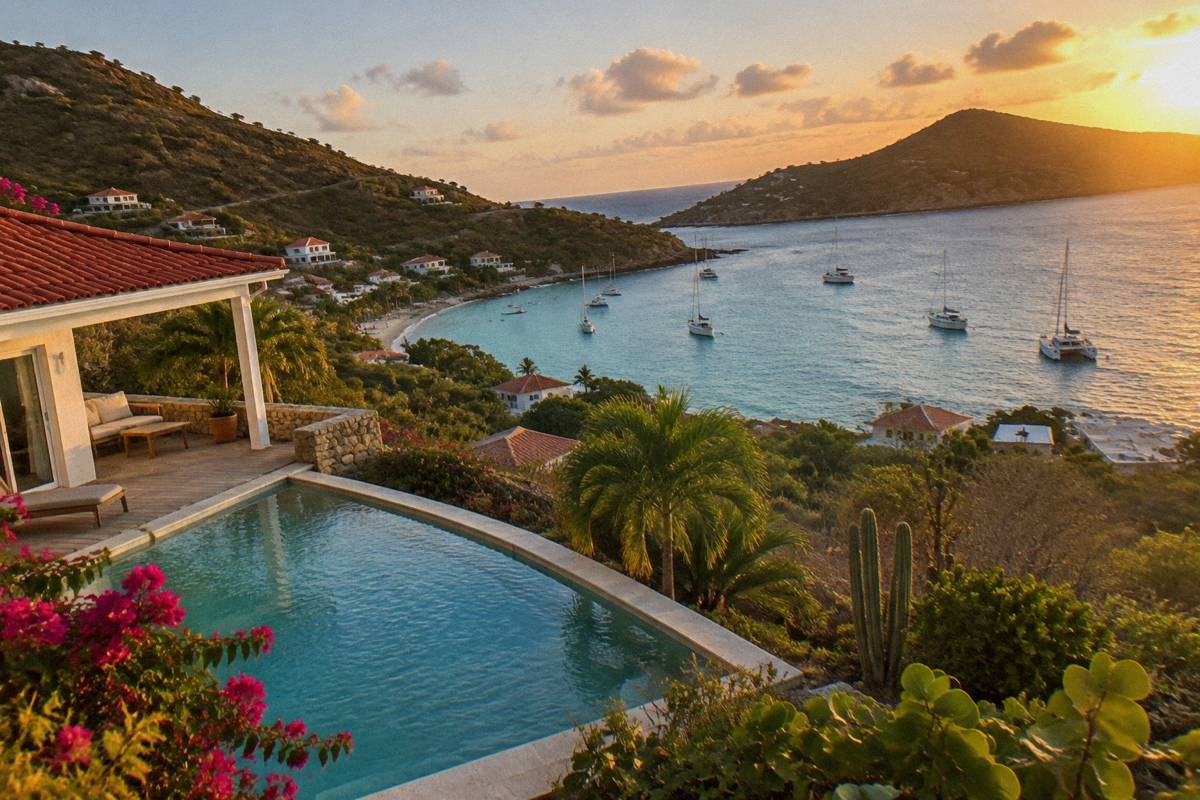
For readers who want the flavour of that setup without the festive-season commitment, a two bedroom architect designed villa in Flamands, sleeping four with a private pool, sea view and on site fitness room, rated 10 out of 10 across 25 reviews, is a fair example of the calibre of rental the island's better listings offer. It sits about 2.4 km in a straight line from Gustavia, close enough that the harbour evening is a short drive without living above it.
On the hotel side, the same scarcity logic applies with different furniture. Eden Rock on Saint-Jean beach, rated 4.6 out of 5 across 411 reviews, is the property most often credited with anchoring the island's modern glamour, perched on the rock above the bay with the beach clubs of Saint-Jean at its feet (see Beach Clubs In St Barts). Rates for Eden Rock are not held here, so see current rates for Eden Rock if you want the real number. What it sells is what the whole island sells: a position that cannot be duplicated because nobody can build another rock.
Why Do All The Billionaires Go To St Barts?
They do not all go, but the concentration is real and it has a schedule: the New Year's Eve fleet in Gustavia has grown from 170 to 226 large yachts in one year, and the same weeks drive villa demand with bookings recommended six to twelve months ahead.
Peak events are the heartbeat. Beyond New Year's Eve, the St Barths Bucket Regatta returns in mid-March 2027, the St Barth Music Festival holds its 43rd edition from 8 to 18 January 2027, and the Saint-Barth Gourmet Festival runs 9 to 15 November 2026 with 14 guest chefs across 12 restaurants. Each event gives the fleet a reason to be in harbour, and each one tightens accommodation for everyone else. Event coverage repeatedly advises booking six to twelve months ahead for these weeks, and the villa benchmarks show why: Knight Frank's indicative weekly figures run from about US$50,000 to 75,000 plus at Christmas for a four bedroom home to US$100,000 to 200,000 plus over New Year for six bedrooms or more, before the typical 10 to 15 percent agency service fee and the 5 percent local accommodation tax.
| Structural factor | The number | Why it matters to the ultra wealthy |
|---|---|---|
| Island area | 25 km2 | Supply of rooms and villas cannot grow |
| Runway length | 646 m, daylight only | Keeps arrivals on small aircraft |
| Luxury hotels | 11, about 500 rooms | Fixed, small winter inventory |
| Luxury villas | Fewer than 300 | Top homes command up to US$500,000/week at NYE |
| Superyacht fleet NYE 2025 | 226 vessels over 78 ft | Record gathering, up from 170 |
| High season | November to April | Compresses demand into the same weeks |
Add the tax and fee structure and the picture is complete. The taxe de sejour is 5 percent of the real price of the stay, excluding ancillary services such as dining, whatever the number of guests, collected by accommodation providers and platforms, and agency villas add a service fee typically 10 to 15 percent on top. None of that deters the festive week visitor; it simply prices the island's scarcity honestly. None of this requires naming anyone. The billionaire pattern on St Barts is what happens when a fixed small supply of excellent rooms and villas meets a short, event driven season, behind a runway that filters out mass travel. For a broader read on the island's luxury tier, see the guide to luxury hotels in St Barts, and the St Barts Christmas and New Year stays guide covers the festive minimums in detail. This site, Best Hotels In Saint Barthelemy, tracks the same 16 hotels and 15 villas year round.
If the quieter side of the same island appeals, Le Sereno on Grand Cul-de-Sac beach reopens 16 November 2026, from $2,709 per night, rated 4.5 out of 5 across 161 reviews; it sits on the calm northeast lagoon, about 5.1 km in a straight line from Gustavia, which keeps the harbour scene at a deliberate distance. See Le Sereno's current rates if that balance of calm and access fits.
Common Questions About Why Billionaires Go To St Barts
Why Do Billionaires Go To St Barts?
Structural scarcity: a 646 m daylight-only runway, about 500 luxury hotel rooms, fewer than 300 luxury villas, and a harbour that hosted a record 226 superyachts at New Year's Eve 2025 on an island of 25 square kilometres.
Why Do Billionaires Like St Barths?
For the concentration: high season runs November to April, so the international wealthy, the yacht fleet and the event calendar all compress into the same short window, with French service culture and a walkable harbour scene in Gustavia.
Why Do Billionaires Go To St Barth?
The same reasons under the island's French name, Saint-Barthelemy: fixed supply, limited access and a festive season where top villas reach up to US$500,000 a week, per Knight Frank's indicative benchmarks.
Why Do Billionaires Go To St. Barts?
Access itself is part of the draw. Almost everyone arrives via a 15 minute connection from St Maarten onto small aircraft, a filter that keeps total airport traffic at 232,269 passengers in a record year, modest by Caribbean standards.
Why Do All The Billionaires Go To St Barts?
Not all, but the New Year's Eve fleet grew from 170 to 226 large yachts in a single year, and peak events (the fireworks, the mid-March regatta, the January music festival) anchor repeat visits with bookings recommended six to twelve months ahead.