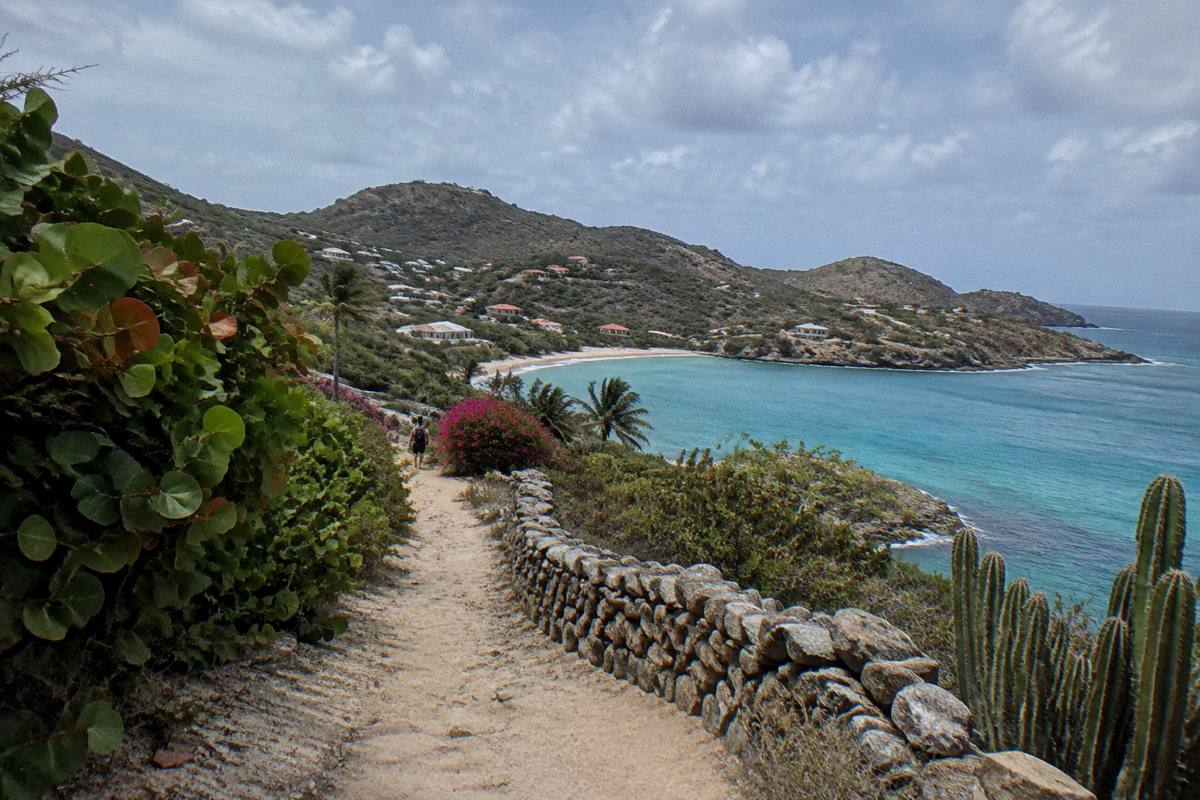
Is St Barts Safe?
Is St Barts safe? An honest look at what the sources actually say: the US government's Level 1 advisory, narrow winding roads, the short runway, and the hurricane window.
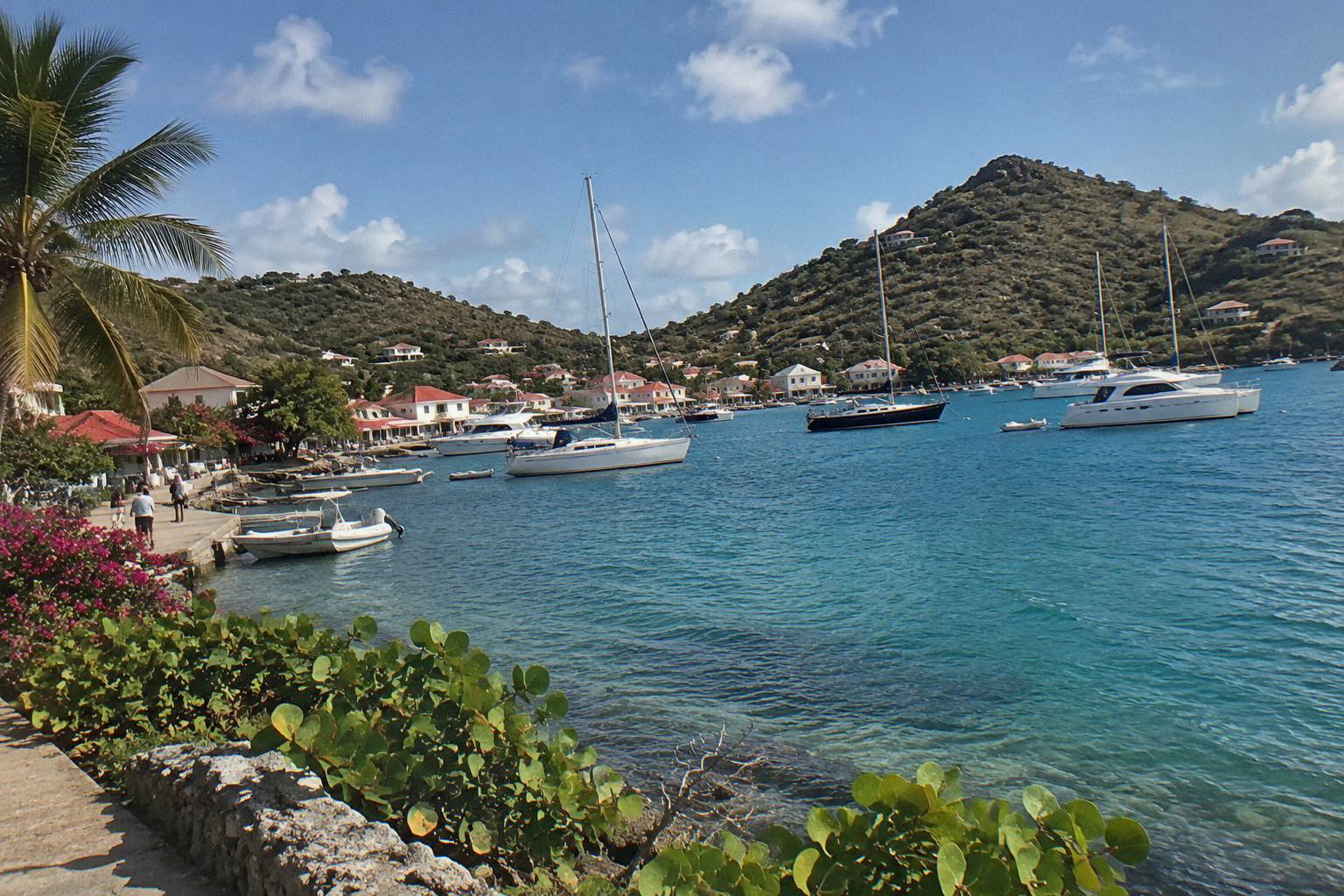
Yes, by the measures that matter: the US State Department rates Saint Barthelemy at Level 1, its lowest advisory tier, "exercise normal precautions". This research found no published crime statistics for the island, so none are quoted here. The practical safety questions for a visitor are narrower ones: the winding roads, the short daylight-only runway, and the 1 June to 30 November hurricane window.
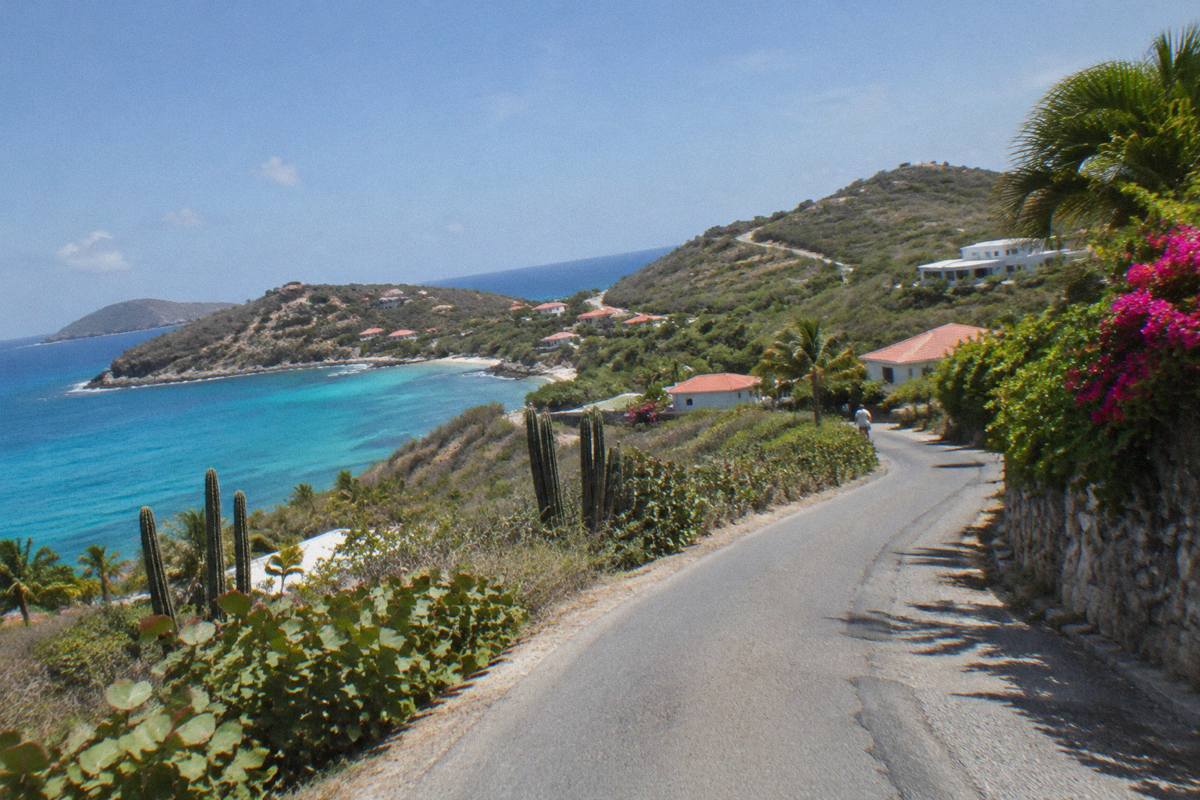
That answer surprises some readers, because safety writing about the Caribbean often leans on vague impressions. St Barts is a small French overseas collectivity of about 10,660 inhabitants whose economy runs almost entirely on hotels, villas and returning visitors, and the official record reflects that. In August 2026 the local prefecture published its first-half security review, noting contained increases in property offences returning to 2024 levels and continued high activity by security forces against organised crime. That is a government summary, not a tourist brochure.
For a stay decision, the honest framing is this: the things worth planning around are not people, they are physics and weather. Roads with blind corners, an airport that closes at sunset, and a storm season with a defined peak. Each of those has a source behind it, and each is covered in full below, once, so you can plan around it rather than worry about it.
If a self-contained stay appeals more than a hotel room, the one-bedroom villa on Grand Cul-de-Sac beach, rated 10 out of 10 across 103 reviews, is the kind of property people choose precisely because it removes moving parts: no driving after dark, no crossing town, just a pool and the lagoon.
How Safe Are The Roads On St Barts?
The roads are the island's most cited everyday safety issue: narrow, winding two-lane routes with blind corners, steep sections and limited visibility, where priority often goes to uphill traffic. The island-wide speed limit is 50 km/h, dropping to 30 km/h in built-up areas such as Gustavia, Saint-Jean and Lorient. Parking is limited in town and near popular beaches.
None of that makes driving dangerous, but it does make it demanding, and every road-safety guide for the island says the same thing about why. The roads were built for a small island that grew rich quickly, so they hug hillsides and switch back on themselves. Local driving guides, including a 2026 road-safety piece and a scooter and quad guide updated in March 2026, describe blind corners, steep inclines and the uphill-priority convention consistently. If you have never driven on a steep, narrow island road, the first drive from the airport is the one to take slowly.
| Road fact | Figure | Note |
|---|---|---|
| Island-wide speed limit | 50 km/h | Applies outside built-up areas |
| Built-up area limit | 30 km/h | Gustavia, Saint-Jean, Lorient |
| Road character | Narrow, winding, blind corners | Priority often to uphill traffic |
| Gustavia to airport | About 3 km, 8 to 12 minutes | The only verified road-time figure |
| Saint-Jean to airport | About 0.5 km | A few minutes at most |
| Parking | Limited in Gustavia and by beaches | Use designated public lots |
Parking deserves a line of planning rather than a line of worry. Spaces in Gustavia and near the better-known beaches are limited, and the advice is to use designated public lots, such as the Collectivité parking in Gustavia, or your hotel or villa space, rather than improvising at a roadside. Guests staying in Gustavia itself, at a property like Fouquet's Saint-Barth, about 0.3 km in a straight line from the harbour, can largely skip the question: the port, its restaurants and the shops are walkable from the centre of town.
Scooters and quads are covered by the same road-safety guides, and the island's rental culture includes them. The honest note here is that a two-wheeler on a road with blind corners and 30 km/h zones demands more of a rider than a car does; if you are not a confident rider, a car is the sensible choice. Road distances are short by mainland standards: Gustavia to the airport is about 3 km and 8 to 12 minutes, and Saint-Jean sits about half a kilometre from the runway.
Is The Airport Landing Dangerous?
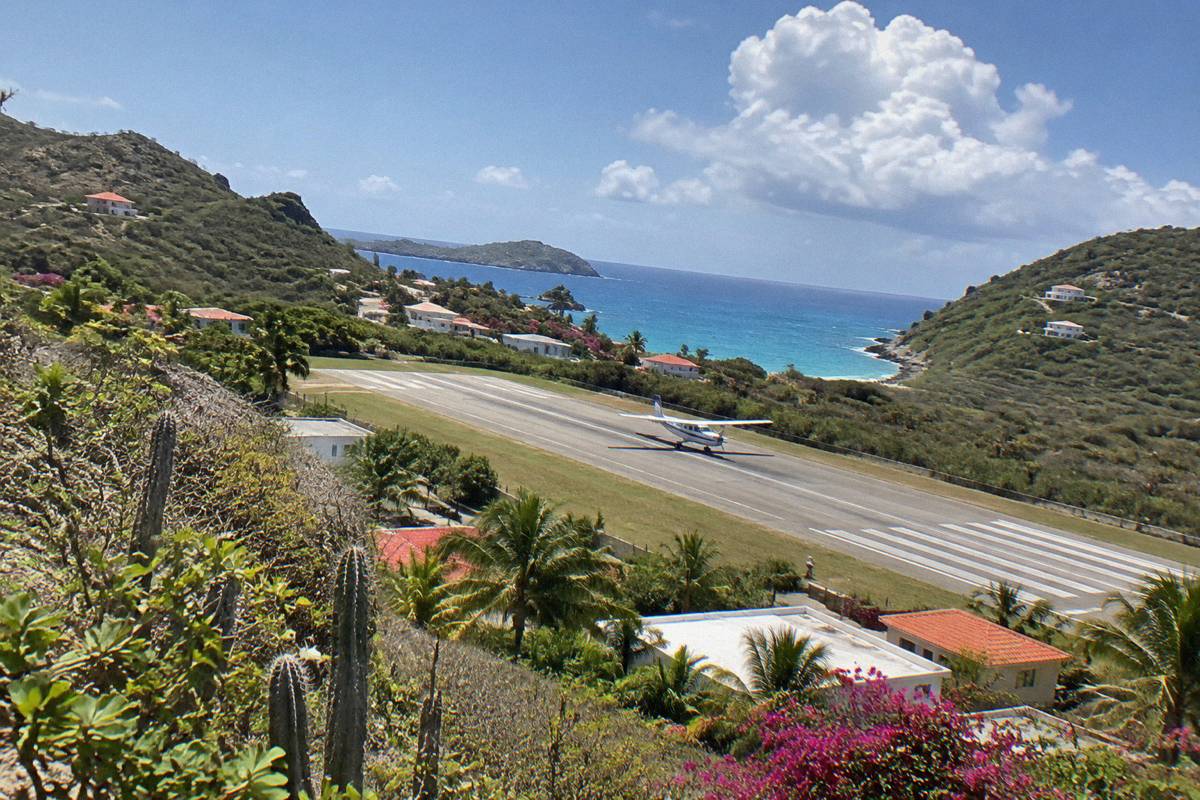
The airport, Gustaf III (SBH), has a single 646 m concrete runway with a steep approach over a hilltop road, and pilots need a special landing licence to use it. It operates in daylight only, with no runway lighting, opening around 07:00 and closing about 15 minutes after sunset. Commercially, thousands of passengers land there safely every year.
The runway is the most filmed, most discussed strip of concrete in the Caribbean, and the numbers behind it are less alarming than the videos suggest. The 2025 total through the terminal was 232,269 passengers, the airport's best year on record, up 14% on 2024, according to the Observatoire du Tourisme. Those passengers arrived on scheduled 15-minute hops from Saint Maarten operated by Winair, St Barth Commuter, Air Caraibes and limited Tradewind services, flown by crews licensed specifically for the approach. The licence requirement is the safety system working, not a warning sign.
The daylight-only rule is the detail that changes travel plans. Because there is no runway lighting, a late-afternoon connection that slips can become an overnight in Saint Maarten rather than a night landing. Building buffer into the last flight of the day is the single most useful airport-safety precaution a visitor can take, and it costs nothing. Baggage rules matter too: Winair's checked maximum is 23 kg per bag, with 23 to 32 kg accepted against an overweight charge, so pack for a small aircraft rather than a widebody.
For travellers who would rather skip the approach entirely, the ferry is a real alternative: Great Bay Express runs the Philipsburg to Gustavia crossing in about 45 minutes, and Voyager sails from Marigot in roughly 50 to 60 minutes. Our guide to getting to St Barts compares the two door to door.
Is Hurricane Season A Reason To Avoid St Barts?
The Atlantic hurricane season runs from 1 June to 30 November, with the peak from mid-August to mid-October and the statistical maximum near 10 September. Many hotels close from late August to late October anyway, which removes most of the decision: the risk window and the annual closure window largely overlap.
The seasonal rhythm is well documented and, unusually, the island's own calendar answers the question for you. High season runs November to April, with pricing typically from mid-November and Thanksgiving week, 26 November 2026, as the unofficial opener. Low season on airport traffic is May to August, and September and early October are the quietest months of the year, precisely when storm risk peaks and when many hotels shut for maintenance and staff holidays. A stay booked inside the classic season sits almost entirely outside the peak-risk window.
The Météo-France climate record shows what the shoulder months actually look like: October averages a mean daily maximum of 31.4 °C with 135.6 mm of rain across about 12.4 rain days, against January's 28.5 °C and 52.6 mm. That is a wetter, warmer month, not a dangerous one, and it explains why visitors who do come in the quiet weeks find low-season rates and empty beaches. The decision is about comfort and closures, not safety alone.
Storms are also a booking-mechanics question rather than only a risk question: this research makes no claim about any individual storm season, and current forecasts are deliberately not quoted here. What can be said plainly is that the defined window, the closure pattern and the seasonal pricing all push leisure stays to the same months. Travellers weighing weather month by month will find the fuller picture, including January's numbers, in Best Hotels In Saint Barthelemy and its season-by-season planning guide.
Which Stays Suit A Safety-First Trip?
The stays that reduce risk are the ones that reduce driving: a hotel walking distance of its own beach and restaurant, or a villa with a pool where the day does not depend on the car. On that logic, beachfront hotels and self-contained villas are the safety-friendly picks, not because anywhere is risky, but because they remove the island's one genuinely demanding activity from the daily routine.
Two properties from the roster illustrate the point at different budgets. Hotel Christopher at Pointe Milou, from $1,524 / night, rated 4.7 out of 5 across 413 reviews, puts a pool, spa and restaurant on one hillside site, so evenings never require a drive down to town.
On the villa side, the two-bedroom villa with Atlantic view at Colombier, sleeping 4 with a private pool and a sea view, rated 10 out of 10 across 17 reviews, offers the same logic for a family: the day's swimming, meals and downtime happen on site, and the car stays parked after dark.
In town itself, options such as Tropical Hotel in Saint-Jean, from $1,081 / night and rated 4.6 out of 5 across 106 reviews, place guests about 1.6 km in a straight line from Gustavia and roughly half a kilometre from the airport end of Saint-Jean, keeping both drives short. For readers comparing hotel and villa formats on their own terms, the villa versus hotel comparison for St Barts works through the trade-offs, including the fact that the villas listed on this site are rentals booked through their live listing pages. Whatever the format, confirm check-in details, transfers and any parking arrangements on the live listing before you travel, since those vary by property.
Common Questions About St Barts Safety
Is St Barts Safe?
Yes, by the official measures: the US State Department rates the island at Level 1, its lowest advisory tier, and this research found no crime statistics suggesting otherwise. The practical cautions are the narrow roads, the daylight-only airport and the 1 June to 30 November hurricane window.
Are the Roads on St Barts Dangerous?
The roads are narrow and winding with blind corners, a 50 km/h island limit and 30 km/h in built-up areas, and priority often goes to uphill traffic. They demand attention rather than fear; drive slowly, expect blind corners and use designated parking.
Is the St Barts Airport Landing Safe?
The 646 m runway requires pilots to hold a special landing licence and operates only in daylight, opening around 07:00 and closing about 15 minutes after sunset. It handled 232,269 passengers in 2025 without interrupting its record growth, on scheduled 15-minute flights from Saint Maarten.
When Is Hurricane Season on St Barts?
The Atlantic season runs 1 June to 30 November, peaking mid-August to mid-October with a statistical maximum near 10 September. Many hotels close from late August to late October, so the high season from November to April sits almost entirely outside the peak-risk window.
Is It Safe to Swim at St Barts Beaches?
Beach conditions such as swimming safety, surf and sargassum are not verified for any specific beach, so no claim is made here. All beaches on the island are public by French law, and conditions on the day are best checked locally.
Sources for the official advisories and airport figures: the US State Department Level 1 advisory for Saint Barthelemy, the prefecture's first-half 2026 security review, and the Gustaf III airport runway specification.