What Country Does St Barts Belong To?
St Barts is an overseas collectivity of France, not an independent country or a US territory. Here is what that means for currency, language, entry rules and where to stay.
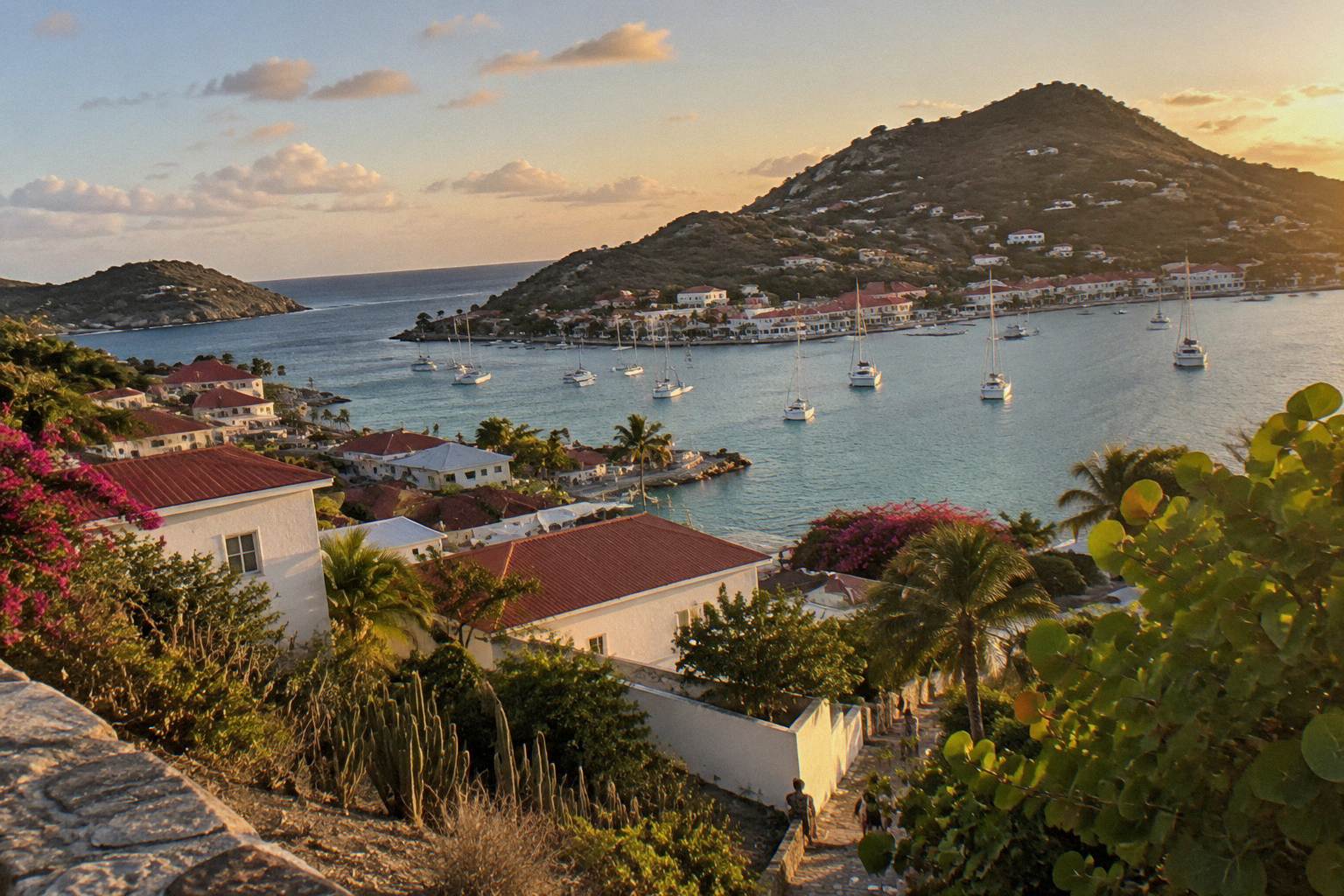
Saint Barthelemy belongs to France. It is an overseas collectivity of the French Republic, a status it has held since 15 July 2007, with Gustavia as its capital and the euro as its currency. It is not an independent country, not a US territory, and not part of the Schengen area, though US dollars are widely accepted at rates shops set themselves.
That one-sentence answer settles the search query, but the territorial detail genuinely changes a trip. The currency in your wallet, the passport in your bag, the 5% tourist tax on your hotel bill and the fact that every beach on the island is public by French law all flow from St Barts being French. This article walks through the status, the surprising Swedish chapter in the island's past, and what the arrangement means in practice for booking a hotel or villa. And since that public beach rule holds island wide, choosing where to settle for the day comes down to location, which is exactly what our guide to matching a beach club to where you're staying helps you sort out.
The island is small, about 25 square kilometres with 10,660 inhabitants at the January 2023 census, and it hosted 26 hotel establishments in 2025, 11 of them in the luxury class, alongside 1,256 declared seasonal rental units. Accommodation is finite and mostly French-run, which is one more reason the political status matters to a visitor planning a stay. Seasonality compounds the squeeze: high season runs November to April, and the Observatoire du Tourisme's airport data shows March 2025 as the island's busiest month on record with 29,037 passengers against 19,457 in May of the same year. For the full accommodation landscape, the where to stay in St Barts guide breaks the island down area by area.
Which Country Does St Barts Belong To?
Saint Barthelemy belongs to France, and has since the first French settlement of 1648, apart from a Swedish interlude from 1784 to 1878. It is an overseas collectivity, a status under French organic law since 15 July 2007, with its own 19-member territorial council handling local taxation, customs and urban planning while France retains defence and foreign affairs.
The overseas collectivity label, COM in French, is precise. It is not a colony, not a department like Guadeloupe, and not an independent state. The island was a commune of Guadeloupe until 15 July 2007, when the organic law of 21 February 2007 made it a collectivity in its own right. The French state describes this history on its own Collectivite de Saint-Barthelemy history page, and the legal basis is set out in the relevant section of French law on Legifrance.
One layer matters to travellers: since 1 January 2012, Saint Barthelemy has been an EU Overseas Country and Territory rather than an outermost region, following European Council decision 2010/718/EU of 29 October 2010. Practically, that places it outside the Schengen area and outside the EU customs union, while keeping deep administrative ties to France. No new arrival form or ETA has been found for 2026 or 2027, and St Barts sits outside the delayed ETIAS scheme.
Wondering how this affects a booking? The taxe de sejour on every paid stay, hotel or villa, is a French-collected levy: 5% of the real price of the stay, excluding ancillary services such as dining, whatever the number of guests, collected by accommodation providers and digital platforms. The rate and its collection are published on the Collectivite's official tax platform. The same rate applies whether the stay is sold in euros or dollars, and it applies year-round, so a summer villa booking carries it just as a Christmas one does.
What Country Owns St Barts?
France owns and administers St Barts. The island's only break from French sovereignty ran from 1784 to 1878 under Sweden, which acquired it by treaty on 1 July 1784 in exchange for trading rights in Gothenburg, and returned it after an 1877 referendum in which residents voted 350 to 1 in favour of France.
The Swedish century left visible traces, most famously the name Gustavia itself, honouring King Gustav III of Sweden, and the street names around the harbour. The transfer back to France was not a sale of territory by conquest: the treaty was signed in August 1877, the referendum followed that October, and the transfer ceremony took place on 16 March 1878. Sweden received payments for assets and officials' pensions, and the island has been French ever since. The referendum result, 350 votes to 1, is one of the more lopsided self-determination votes on record anywhere, and it is documented in the historical record of the 1877 Saint Barthelemy status referendum.
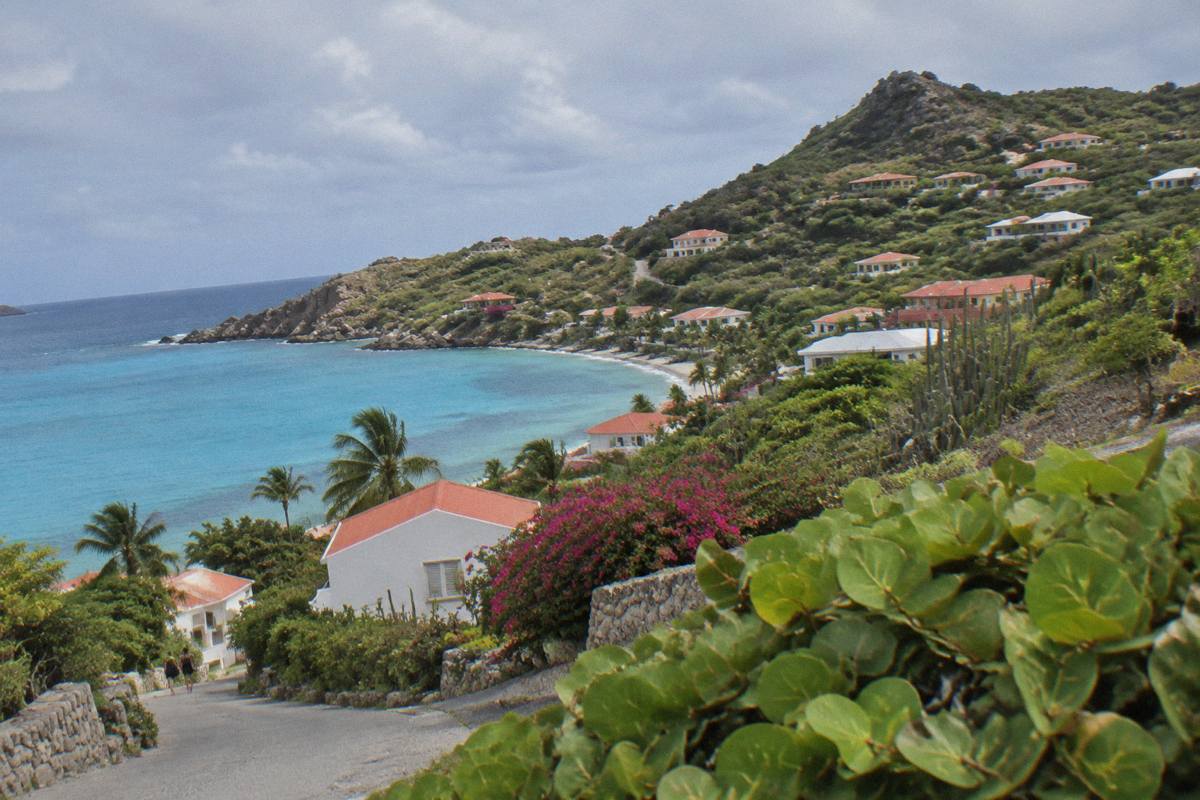
For a visitor choosing where to sleep, this history is not just trivia. Gustavia remains the island's capital and its densest cluster of harbourfront dining, and one hotel on this site sits practically inside it: Fouquet's Saint-Barth (formerly Barriere Le Carl Gustaf), about 0.3 km from the harbour in a straight line, rated 4.5 out of 5 across 115 reviews, with rooms from $2,945 / night. If seeing French and Swedish heritage on foot from your room door appeals, see current rates for Fouquet's Saint-Barth. The island's famous New Year's Eve fireworks, launched over the harbour on 31 December each year with no change announced for the coming season, are easiest to watch from stays on this side of the island.
| Date | Event | Sovereign |
|---|---|---|
| 1648 | First French settlement | France |
| 1 July 1784 | Cession by treaty, trading rights in Gothenburg exchanged | Sweden |
| October 1877 | Referendum, 350 votes to 1 for return | Sweden (pending) |
| 16 March 1878 | Transfer ceremony in Gustavia | France |
| 15 July 2007 | Overseas collectivity status | France |
| 1 January 2012 | EU Overseas Country and Territory | France |
Is St Barts A Us Territory?
No, St Barts is not a US territory. It is French, which is why US citizens need a valid passport for entry and why the euro, not the dollar, is the official currency. The US State Department treats Saint Barthelemy as a Level 1 destination, exercise normal precautions, in its travel advisory updated in August 2026.
The confusion usually comes from geography and from St Barts feeling Caribbean-American in clientele. American visitors are the island's dominant market, English is widely spoken in hotels, shops and restaurants, and US dollars are accepted almost everywhere. But acceptance is not parity: businesses set their own exchange rates, often unfavourable ones, and money guides consistently advise paying in euros for the best value. ATMs dispensing euros sit in Gustavia near the harbour, and international Visa and Mastercard cards work reliably, so a card that avoids foreign transaction fees is the quiet winner here.
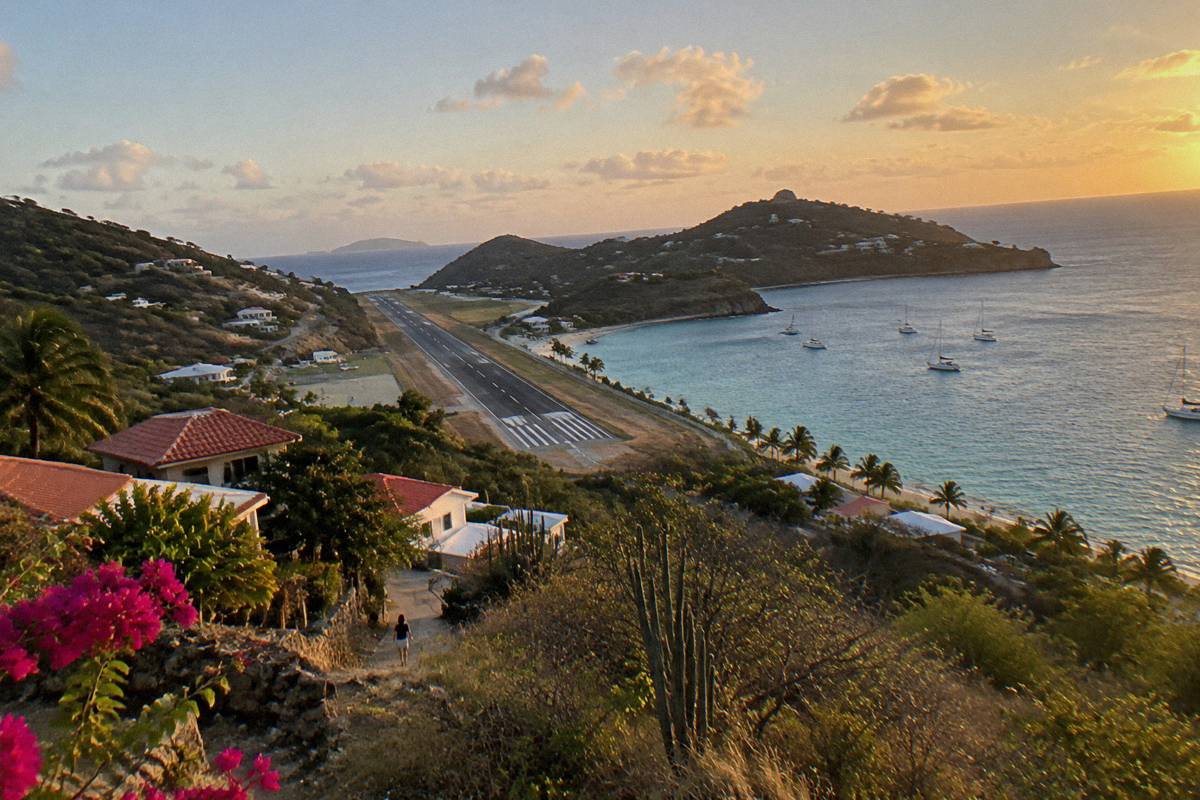
Entry rules are the ones France sets for its overseas collectivity. EU nationals may enter with a national identity card or passport; others, including Americans and Canadians, need at least one valid passport. No new biometric or online arrival requirement specific to St Barts has been verified for 2026 or 2027. The practical arrival logistics, the St Maarten connection and the short hop to the island's 646-metre runway, are covered in the how to get to St Barts guide. That runway sits in the Saint-Jean area, about 3 km and 8 to 12 minutes by road from Gustavia, and the airport operates daylight hours only, with no runway lighting, opening around 07:00 and closing about 15 minutes after sunset.
Is St Barts A Country?
St Barts is not a country. It has no seat at the United Nations, no separate citizenship and no currency of its own; it is a territorial collectivity of the French Republic with a local council of 19 members elected for five years, exercising powers devolved from Paris including local taxation, customs and urban planning.
The distinction matters legally and financially. There is no St Barts passport, only French citizenship. Laws on the island are French laws adapted by the territorial council, and the currency is the euro under a monetary agreement that survived the island's 2012 shift to Overseas Country and Territory status, as recorded in the European Union decision of 2011 on the monetary agreement. When you pay a hotel bill, the service-included convention on restaurant and bar bills is French law too: service compris, with tipping optional and 5 to 10% extra common for excellent service.
For stays, French administration shows up in the rental market too. There is no cap on annual rental days for villas, unlike mainland France, but owners must declare the activity and collect the 5% tourist tax. Fewer than 300 luxury villas exist on the whole island by one 2026 count, which keeps quality high and availability tight in the festive weeks when most estates hold 14-night minimums, roughly 20 December to 3 January. January minimums revert to normal, and some properties allow 10 or 7 nights instead, so the festive squeeze is a policy choice by estate, not a law.
What Country Does St Barths Belong To? Currency, Language And Daily Life
St Barths belongs to France, so the official currency is the euro, French is the official language, and English is widely spoken across tourism, shops, hotels and restaurants. US dollars are accepted but at shop-set rates, electricity runs at 230 V with plug types C and E, and restaurant bills include service by law.
Daily life on a French collectivity is smoother than many first-time visitors expect. English-speaking staff are the norm at every hotel on this site's roster. Mobile coverage runs on Orange Caraibe, with 5G in Gustavia and Saint-Jean since August 2023 and 4G elsewhere, plus Digicel; travel eSIMs work on unlocked phones if installed before arrival. The island's speed limit is 50 km/h, dropping to 30 km/h in built-up areas, and roads are narrow with blind corners, so staying close to the areas you plan to visit saves real driving time. Priority on the steeper stretches often goes to uphill traffic, a local convention worth knowing before your first drive.
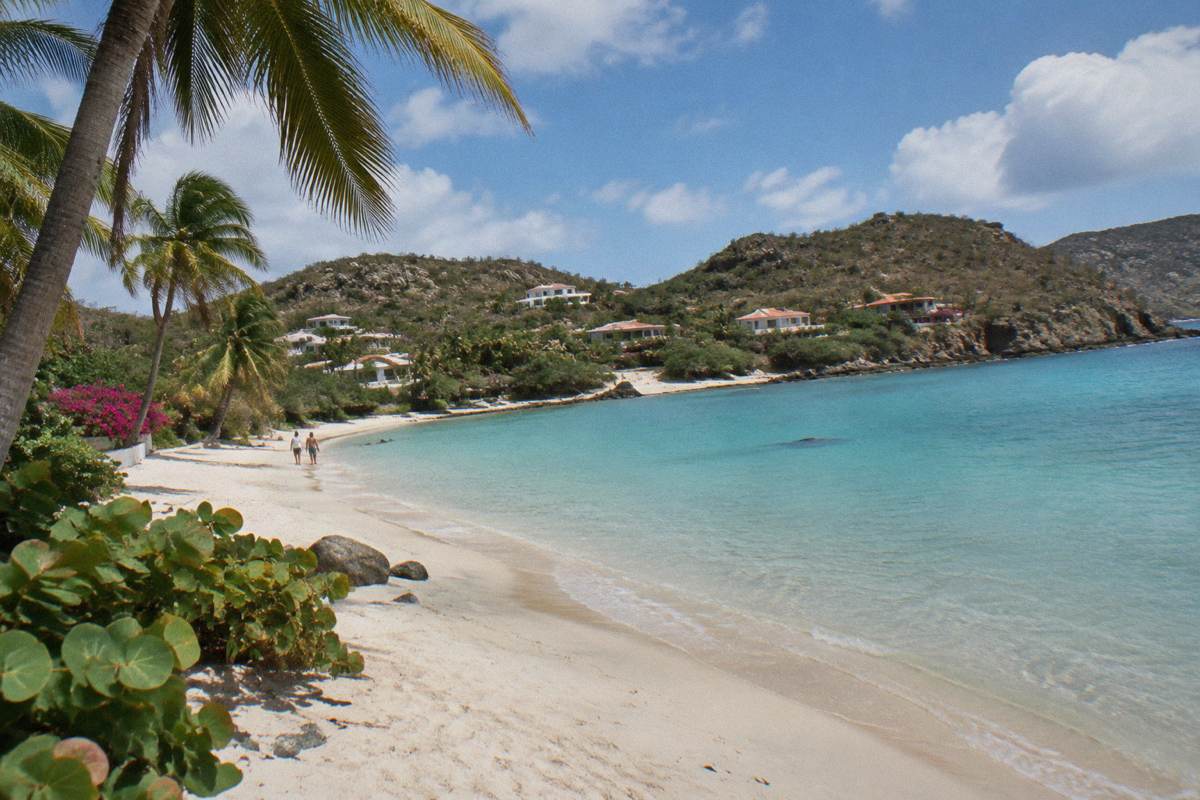
Here is the practical French-island checklist at a glance:
| Topic | What applies on St Barts |
|---|---|
| Sovereignty | France, overseas collectivity since 15 July 2007 |
| Capital | Gustavia |
| Official currency | Euro; US dollars widely accepted at shop-set rates |
| Official language | French; English widely spoken in tourism |
| Tourist tax | 5% of the real price of the stay, excluding dining, any number of guests |
| Restaurant bills | Service compris; tipping optional, 5 to 10% for excellent service |
| Electricity | 230 V, 60 Hz, plug types C and E |
| Beaches | Public by French law, up to 22 on the island |
Where To Stay On The French Island
Accommodation on St Barts splits into 26 hotels and a villa market of fewer than 300 luxury properties, so the French status plus the small inventory makes early booking the norm, especially for the mid-November to April high season. A boutique hotel near Gustavia keeps French-administered Gustavia walkable; a villa trades that for a private pool and space.
The featured stay for this article is Gyp Sea Hotel (formerly Villa Marie) in Colombier, about 2.6 km from Gustavia in a straight line, rated 4.7 out of 5 across 127 reviews, with rooms from $1,559 / night. It earned a Michelin Key in 2025, one of nine properties on the island to do so as reported, and it sits on the quieter southwest side of the island, a short drive from the harbour. Its season reads show the island's rhythm plainly: the same from-rate in high season (January) and shoulder (March), easing in low season (June) to $841 / night, which is the pattern most St Barts hotels follow, with the deepest discounts in September and early October when many properties close altogether for maintenance and staff holidays. To compare it against the island's full top tier, the luxury hotels in St Barts guide covers the hillside and harbour options together, and this site's broader coverage begins at Best Hotels In Saint Barthelemy.
On the villa side, the roster includes properties like the one-bedroom modern villa at Grand Cul-de-Sac, on the beach with a private pool, sleeping 2, rated 10 out of 10 across 103 reviews on the villa scale. Villas carry no nightly figure until dates are entered, so treat any weekly benchmark you see elsewhere as indicative only; agency villas also add a service fee typically 10 to 15% plus the 5% local tax. For the full private-rental picture, see the St Barts villa rentals guide.
One last French detail worth knowing before you book: every beach on the island is public under French law, and hotels cannot restrict access to the waterline, though paid loungers and facilities are possible. Choosing between a beachfront resort and a hillside villa is therefore about service and view, not about access rights. The same principle means a stay anywhere on the island leaves you free to walk every one of the island's beaches, up to 22 by the common count, regardless of where you sleep.
Common Questions About What Country St Barts Belongs To
What Country Does Saint Barts Belong To?
Saint Barts belongs to France. It has been a French overseas collectivity since 15 July 2007, with Gustavia as its capital, the euro as its currency and French as its official language.
What Country Owns St Barts Island?
France owns St Barts island, and has since 16 March 1878, when Sweden formally returned it after a referendum in which residents voted 350 to 1 in favour of France.
What Country Does St. Barts Belong To?
St. Barts belongs to France, specifically as an overseas collectivity of the French Republic rather than as an independent country or a territory of the United States.
Is St Barts A Us Territory?
No. St Barts is French, so US citizens need a valid passport to enter, the official currency is the euro, and entry rules are the ones France sets for its overseas collectivities.
Is St Barts A Country
No, St Barts is not a country. It is a territorial collectivity of France with a 19-member council elected for five years, no separate citizenship and no currency of its own.
What Country Does St Barths Belong To?
St Barths belongs to France. US dollars are widely accepted but shops set their own exchange rates, so paying in euros is advised for the best value during your stay.