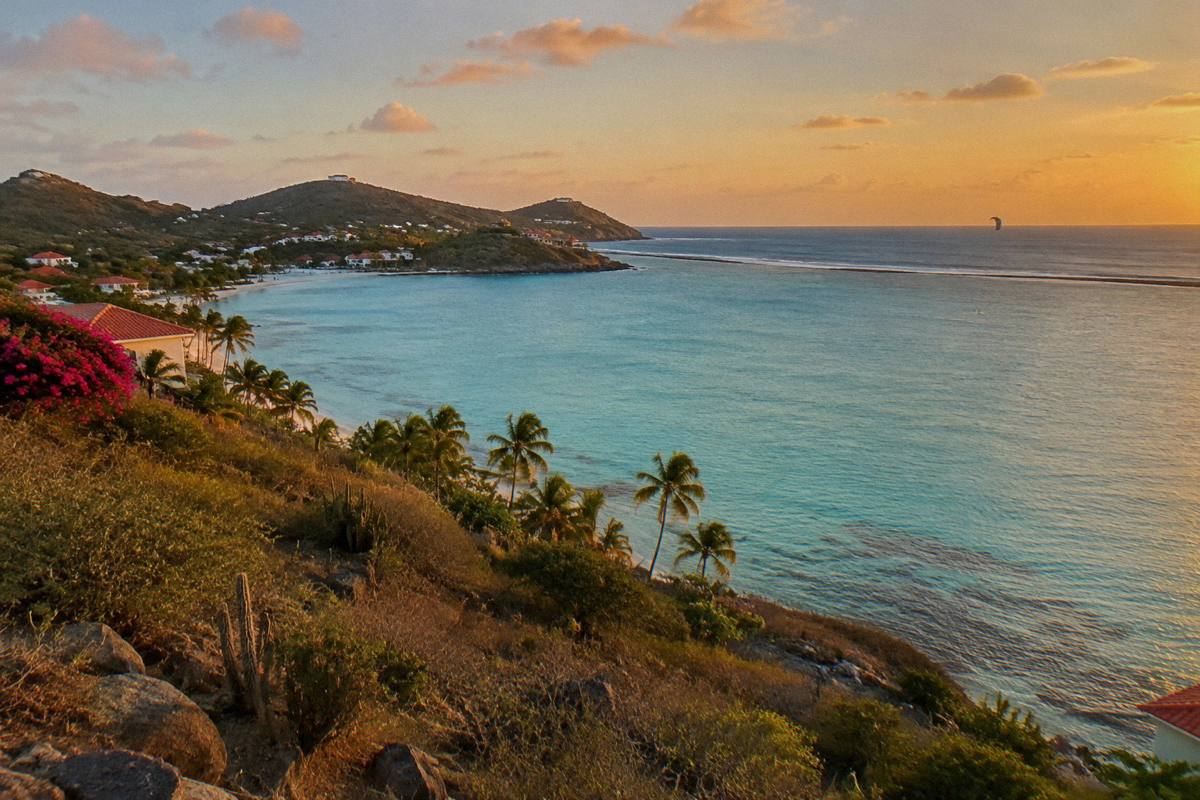
What Is So Special About St Barts?
What sets St Barts apart: 25 square kilometres, up to 22 public beaches, a French collectivity of 10,660 residents, 26 hotels and a marine reserve, with the stay choices that follow.
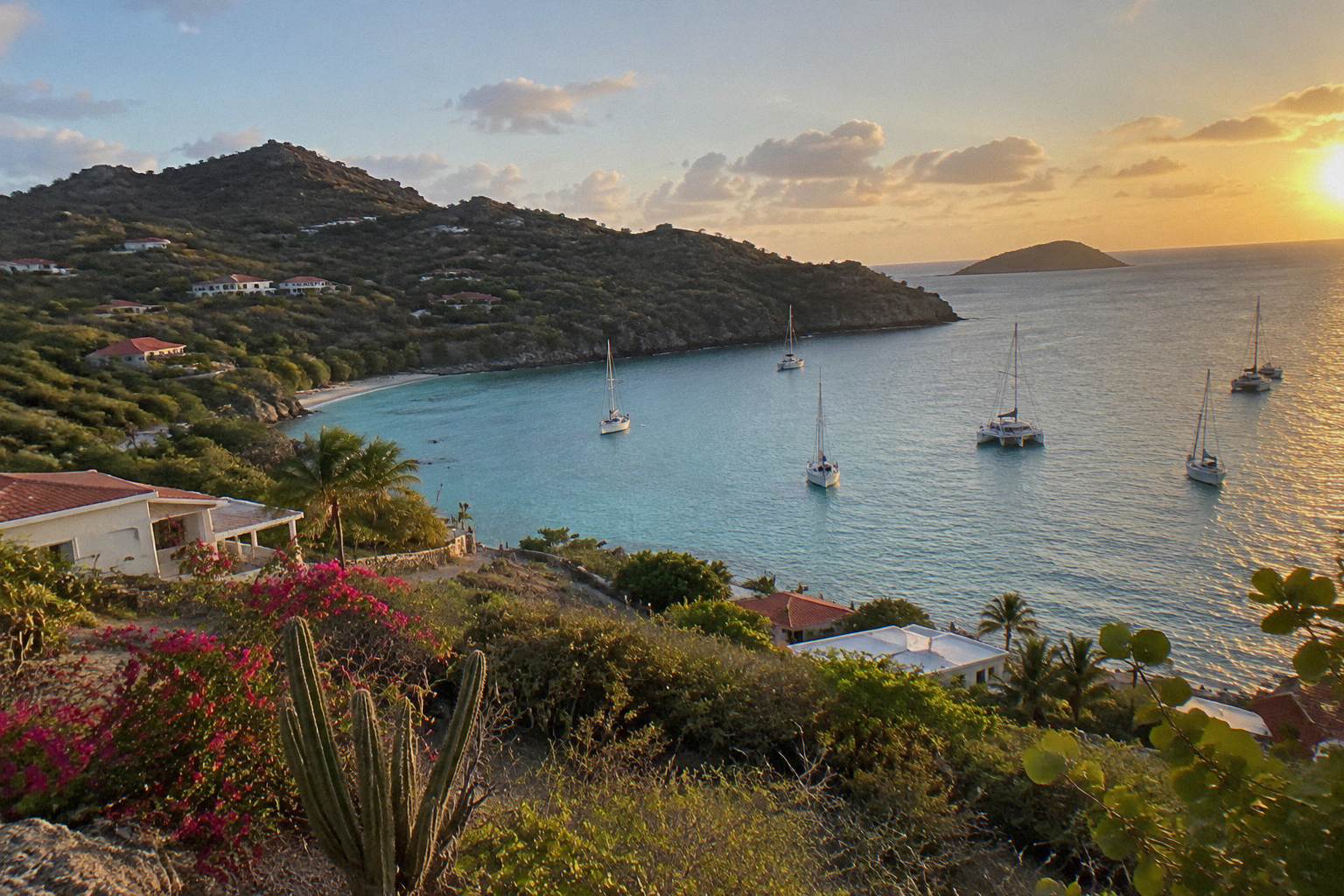
Saint Barthelemy is a French overseas collectivity covering 25 square kilometres with 10,660 residents, a euro currency, French as its official language, and up to 22 public beaches, all of them public by law. It also has a marine reserve of more than 1,000 hectares, founded in 1999, and just 26 hotels, of which 11 are luxury properties. That density of protected coastline, small scale and French administration is the honest answer to the question.
Most islands this size offer one of those things. St Barts stacks all of them inside a drive of under half an hour. The airport at Saint-Jean sits about 0.5 km from the beach village, and Gustavia, the capital, is about 3 km and 8 to 12 minutes from the runway by road. The island's whole geography rewards a short stay in one place rather than a touring holiday.
This article works through the facts that make the island distinct, then turns to the practical question those facts raise: where to sleep on an island with only 26 hotels and a villa market that many visitors never see. For a full comparison of the options, the where to stay in St Barts guide breaks the island down area by area.
The short answer is scale plus legal public access plus French administration: 25 square kilometres, 10,660 residents, a euro currency, up to 22 beaches with every beach public by French law, and a marine reserve of more than 1,000 hectares in place since 1999. No other Caribbean island this small combines all four, and the accommodation layer on top, 26 hotels of which 11 are luxury, is proportionally tiny.
Start with the law, because it shapes every visit. All beaches on St Barts are public by French law, and no hotel or beach club can restrict access to the waterline, so the best sand on the island cannot be fenced off behind a room key. Paid loungers and facilities may exist, but the beach itself is open. Visitors staying in a modest small hotel walk onto the same sand as guests of the top resorts.
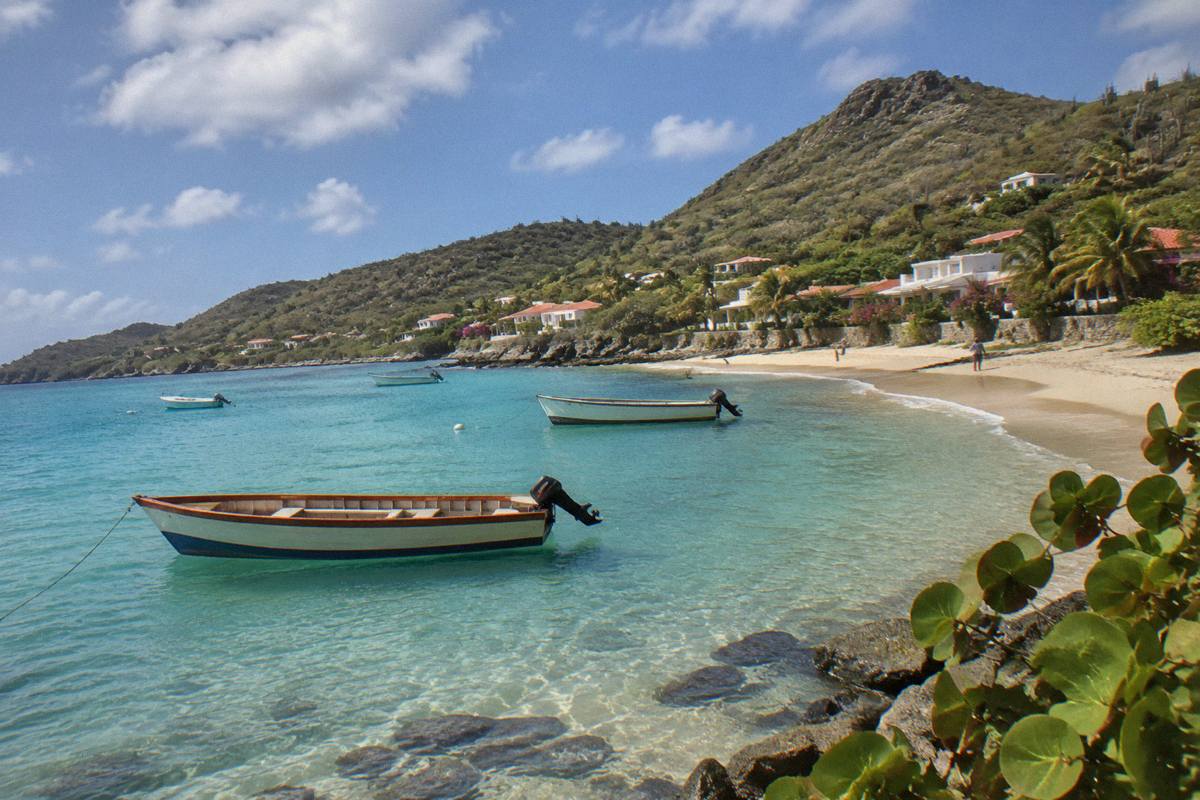
Then the marine reserve, founded in 1999 and covering more than 1,000 hectares, protects the waters around the island. The collectivity's official figures give the context for how the island is used: the airport recorded 232,269 passengers in 2025, its best year on record and a 14 percent rise on 2024, with March the busiest month at 29,037 passengers and May the quietest of that sample at 19,457. Even at peak, the visitor volume spreads across a coastline with roughly twenty public beaches.
The French layer runs deeper than the flag. The euro is the official currency, French is the official language with English widely spoken in hotels and restaurants, restaurant bills include service by French law, and the local tourist tax, the taxe de sejour, is 5 percent of the real price of the stay, collected by accommodation providers and platforms. The island is an overseas collectivity of France, not an independent state, as the Wikipedia article on Saint Barthelemy sets out with the census and area figures used here. If that political status raises practical questions for your trip, the guide to what country St Barts belongs to explains how French sovereignty shapes entry rules, currency, and where to stay.
Against that backdrop, here are the three stays that most directly answer the "special" question in practice: the signature hotel of Saint-Jean bay, the most secluded luxury hotel, and a one-bedroom villa right on the sand at Grand Cul-de-Sac.
Why Is St Barts So Famous?
Fame on St Barts rests on three documented pillars: a luxury hotel sector of 11 properties that earned Michelin Keys in 2025, a superyacht scene that recorded 226 vessels over 78 feet around Gustavia at New Year 2025, and repeat recognition in travel media that keeps Saint-Jean bay and Flamands in the public eye. The island's fame is a concentration effect, not a single attraction.
The 2025 Michelin Guide keys, announced in October 2025, put the island's hotel standard in writing: Cheval Blanc Isle de France took 3 Keys, Le Barthelemy and Rosewood Le Guanahani (the property that becomes Airelles Le Guanahani from 1 November 2026) took 2 Keys each, and Christopher, Gyp Sea, Sereno, Tropical, Carl Gustaf and Manapany took 1 Key each. That is nine keyed properties on a 25 square kilometre island.
The superyacht numbers are just as specific. Gustavia harbour recorded its largest ever superyacht gathering for New Year's Eve 2025, with 226 vessels over 78 feet in the harbour and surrounding waters, up from 170 the year before. New Year's Eve fireworks over Gustavia on 31 December follow the same pattern every year, and no change has been announced. Knight Frank's 2026 market digest reports that around 95 percent of villa owners rent their properties out, and that top villas command up to US$500,000 a week around New Year.
Media attention feeds on the same facts. Eden Rock, perched on the rock in Saint-Jean bay and rated 4.6 out of 5 across 411 reviews, is one of the island's iconic historic luxury resorts, and you should see current rates for Eden Rock rather than trusting a figure from an old article, because its rates are not held in a published band. The hotel has a pool, spa and restaurant and sits on Baie de Saint-Jean, about 1.6 km in a straight line from Gustavia.
Fame has a seasonal rhythm, and it is worth knowing before booking. High season runs November to April, with pricing typically beginning mid-November and Thanksgiving week, 26 November 2026, as the unofficial opener. The Saint-Barth Gourmet Festival runs 9 to 15 November 2026 with 14 guest chefs across 12 restaurants, and the St Barth Music Festival holds its 43rd edition from 8 to 18 January 2027.
How Does The French Character Shape A Stay?
The French character shows up in concrete, checkable ways: the euro as official currency with dollars accepted at shop-set rates, restaurant bills that include service by law with optional extra tipping, a 5 percent taxe de sejour on every paid stay, 230 volt type C and E plugs, and French as the official language with English widely spoken in hotels and restaurants. None of this is cosmetic.
Money first. The official currency is the euro, and ATMs in Gustavia dispense euros. US dollars are widely accepted, but businesses set their own exchange rates, which are often unfavourable, so paying in euros is the better-value habit. Restaurant and bar prices include service by French law, tipping is optional, and 5 to 10 percent extra is a common gesture for excellent service.
The tourist tax applies to every paid stay whatever the accommodation type: 5 percent of the real price of the stay, excluding ancillary services such as dining, whatever the number of guests, collected by accommodation providers and digital platforms. Villa rentals add a service fee typically running 10 to 15 percent plus that 5 percent local tax, per the Knight Frank 2026 digest, so a villa rate quoted by an agency is not the final number.
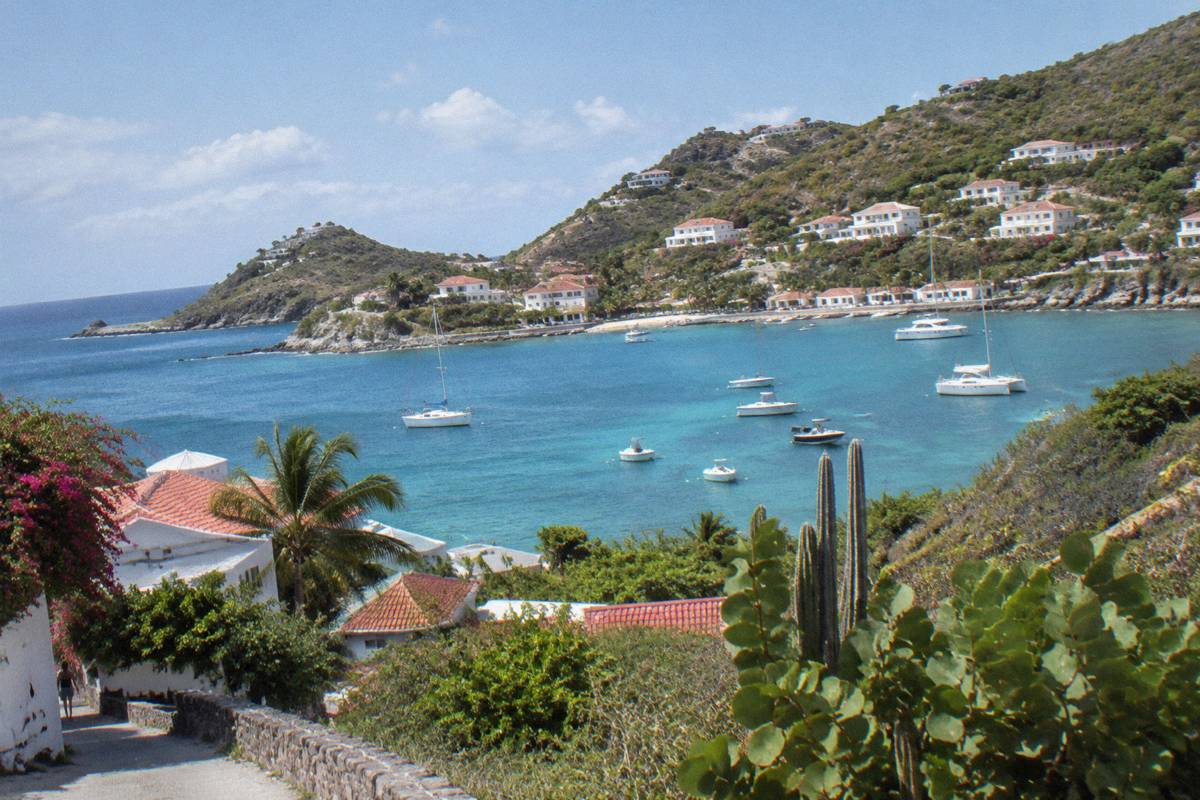
Practical travel details carry the same French administrative stamp. EU nationals may enter on a national identity card or passport; others, including Americans and Canadians, need at least one valid passport. St Barts sits outside the Schengen area, and no new arrival form or electronic travel authorisation has been found for 2026 or 2027. Electricity is 230 V at 60 Hz with plug types C and E, worth checking before packing for a villa with a kitchen.
How Small Is The Island In Practice?
The island measures 25 square kilometres with 10,660 residents recorded in the January 2023 census, a single airport runway of 646 metres serving 232,269 passengers in 2025, and road distances short enough that Gustavia is 8 to 12 minutes from the airport while Saint-Jean is about 0.5 km away. Small scale here is a fact you plan around, not a slogan.
| Measure | Figure | What It Means For A Visitor |
|---|---|---|
| Land area | 25 square kilometres | Everything is within a short drive; no long transfers |
| Population | 10,660 residents (Jan 2023 census) | A village-scale community, not a resort town |
| Public beaches | Up to 22, all public by law | No hotel can fence off the waterline |
| Hotels | 26 establishments, 11 luxury (2025) | Limited beds; early booking matters in season |
| Seasonal rentals | 1,256 declared units (2025) | Villas outnumber hotel rooms island-wide |
| Airport passengers | 232,269 in 2025, a record | Peak months still spread across many beaches |
| Marine reserve | Founded 1999, over 1,000 hectares | Protected waters surround the island |
The airport itself is part of the island's character. The runway at Gustaf III measures 646 metres, has no lighting, and operates daylight hours only, opening around 07:00 and closing about 15 minutes after sunset. Incoming flights connect through Saint Maarten or San Juan on small aircraft. Island speed limits are 50 km/h, dropping to 30 km/h in built-up areas such as Gustavia, Saint-Jean and Lorient, and the roads are narrow and winding with limited visibility, which is why area choice matters more than distance on a map. Everything else covered here is indexed on Best Hotels In Saint Barthelemy.
Official taxi tariffs give a sense of the scale: from the airport to Gustavia about 30 euros, to Saint-Jean about 30 euros, to Flamands about 40 euros in the daytime, with surcharges after 18:30 and on Sundays. Straight-line distances in listing data, such as a hotel about 4.0 km from Gustavia, understate the drive, since the road distance is always longer.
Where Should You Sleep On An Island This Small?
Sleeping choices divide into 26 hotels, of which the luxury tier runs from about $1,559 to $2,945 per night in high season at the properties holding published rates, and 1,256 declared seasonal rental units, villas that carry no nightly figure until you enter dates. The choice is really between service concentration and private space, and the island's geography makes both workable.
On the hotel side, the published high-season bands are genuinely narrow and genuinely high. Fouquet's Saint-Barth in Gustavia runs from $2,945 per night, Le Sereno at Grand Cul-de-Sac from $2,709, Le Barthelemy from $2,657, Gyp Sea Hotel from $1,559, Hotel Christopher from $1,524, and Hotel Manapany from $1,608. Low season in June drops those reads by a third to a half where rates are held: Le Sereno's June read is $1,826, Le Barthelemy's is $1,538, and Gyp Sea's is $841. Several properties, including Eden Rock, Airelles Le Guanahani and Hotel Le Toiny, hold no published rate, so the honest instruction is to see current rates rather than trust a number copied from an older article.
The entry into hotel territory is lower than the luxury tier suggests. Tropical Hotel in Saint-Jean, a small hotel with a restaurant rated 4.6 out of 5 across 106 reviews and holding a Michelin Key, runs from $1,081 per night in high season. It sits about 1.6 km in a straight line from Gustavia and roughly 0.5 km from the airport road, which makes it one of the most practical beds for a first visit built around Saint-Jean beach.
On the villa side, the market is bigger than many visitors expect. The Observatoire du Tourisme counted 1,256 declared seasonal rental units in 2025, providing 5,136 rooms across hotels and rentals and capacity for 7,322 people, and the villa segment alone was reported at 1,113 registered villas in the 2023-2024 season. Villas carry no nightly figure on their listings until dates are entered, so any per-night number you see quoted for one is a guess. What is verifiable is the spec: a new architect-designed 2-bedroom villa at Flamands, rated 10 out of 10 across 25 reviews, sleeps 4 with a private pool, a sea view and an on-site fitness centre, about 2.4 km in a straight line from Gustavia.
For weighing the two paths properly, the St Barts villa rentals guide covers the villa market in detail, and the boutique hotels in St Barts roundup covers the smaller hotel tier. A honeymoon-focused comparison sits in the honeymoon hotels and villas guide.
When Is The Island At Its Most Special?
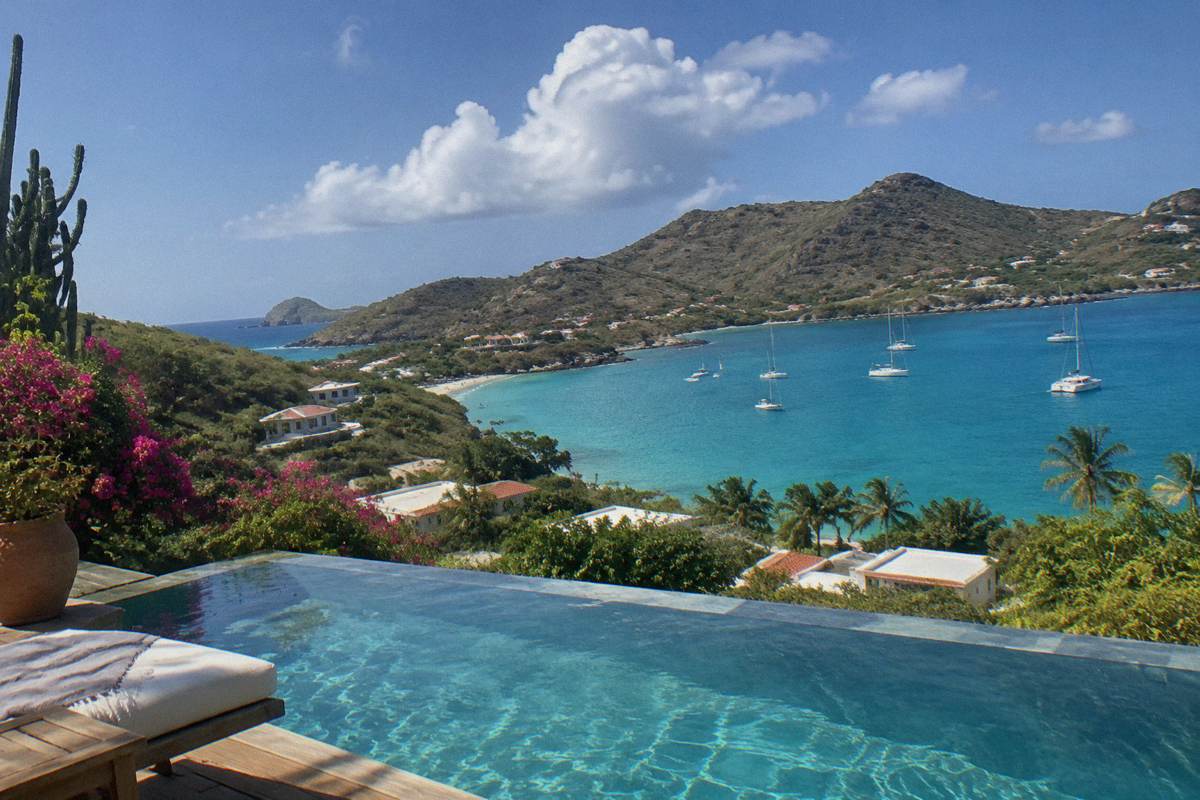
The island is at its most characteristic from mid-November to April: high season pricing opens around Thanksgiving week on 26 November 2026, the Gourmet Festival runs 9 to 15 November 2026, and the Music Festival runs 8 to 18 January 2027, while many hotels close from late August to late October and September and early October are the quietest months.
The seasonal calendar is documented, not folklore. Hurricane season officially runs 1 June to 30 November, with the peak from mid-August to mid-October and the statistical maximum near 10 September, per the NOAA tropical cyclone climatology page. Many hotels close from late August to late October for maintenance and staff holidays, with most restaurant reopenings falling between 15 and 24 October 2026. Le Sereno reopens 16 November 2026, and Le Guanahani reopens as Airelles Le Guanahani from 1 November 2026.
Weather itself is steadier than the hurricane reputation suggests. Météo-France normals for the island, published for station 97123001 on the official climate data sheet, show January averaging a daily maximum of 28.5°C with 52.6 mm of rain, against September at 31.7°C and 96.9 mm. Sea temperature runs about 26°C from January to March and about 29°C in September and October.
Christmas and New Year carry their own rules: most villa estates hold a 14-night festive minimum, roughly 20 December to 3 January, some allow 10 or 7, and January reverts to standard minimums. Peak events around New Year, the Bucket Regatta in mid-March 2027, and the festivals above drive demand, and bookings are commonly recommended well ahead for those windows.
So the honest summary of what is special: public beaches by law, French administration in the euro zone, a marine reserve, a record small airport, and a hotel stock capped at 26 properties on 25 square kilometres. These three stays bracket the range, from the rock in Saint-Jean bay to the quiet of Toiny to a private pool steps from the lagoon.
Common Questions About What Is So Special About St Barts
What Is So Special About St Barts?
It is a French overseas collectivity of 25 square kilometres with 10,660 residents, up to 22 public beaches all public by law, a marine reserve of more than 1,000 hectares founded in 1999, and just 26 hotels, 11 of them luxury. The concentration of protected coastline, French administration and limited beds is what sets it apart.
What Is So Special About Saint Barts?
Saint Barthelemy, often written Saint Barts or St Barts, is the same island: a French collectivity using the euro, with French as the official language and English widely spoken. Its fame rests on 11 luxury hotels, several holding Michelin Keys in 2025, and a superyacht scene that drew 226 large vessels at New Year 2025.
What Is So Special About St. Barts?
The same facts apply under any spelling. The island has one 646-metre daylight-only runway, restaurant bills that include service by French law, a 5 percent taxe de sejour on stays, and 1,256 declared seasonal rental units alongside its 26 hotels, per the Observatoire du Tourisme 2025 figures.
Why Is St Barts So Famous?
Its luxury hotel sector earned multiple Michelin Keys in 2025, its harbour recorded a record 226 superyachts at New Year 2025, and travel media repeatedly feature properties such as Eden Rock on Saint-Jean bay. Fame here is a concentration of luxury beds, yachts and media attention on a very small island.
Do You Need Euros On St Barts?
The euro is the official currency and ATMs in Gustavia dispense euros. US dollars are widely accepted, but businesses set their own exchange rates, which are often unfavourable, so euros are the better-value choice for everyday spending.
Are All Beaches On St Barts Public?
Yes. All beaches are public by French law, and hotels and beach clubs cannot restrict access to the waterline. Paid loungers and facilities may be offered, but access to the beach itself is free for everyone, whichever hotel or villa you stay in.